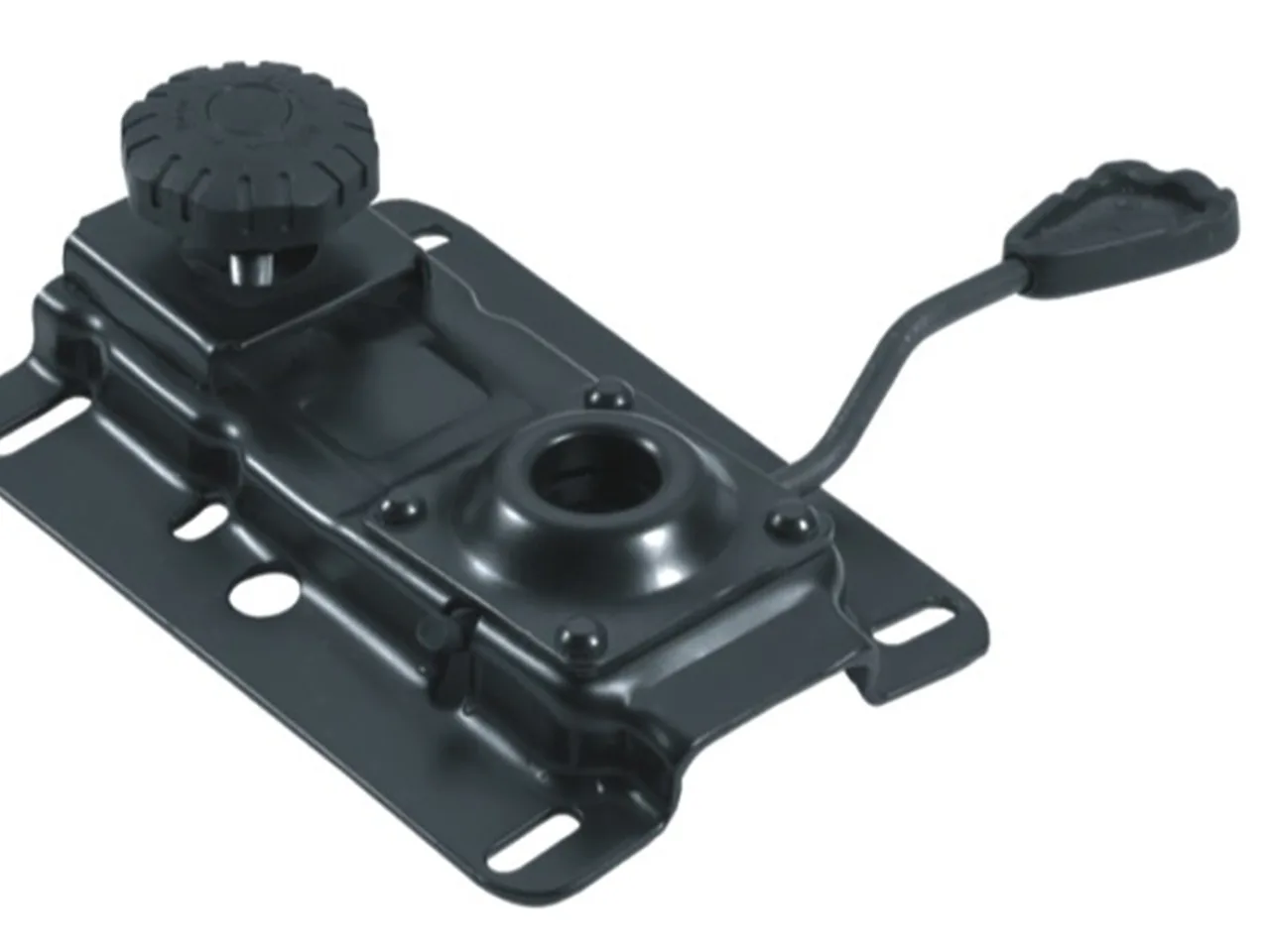
There is no ISO standard for how a tilt mechanism bolts to a seat. No committee ever sat down and decreed a hole pattern. And yet you can buy a mechanism from us, a base from one neighbour and a gas lift from another, and the chair goes together. That is worth pausing on, because the de-facto standards that make it possible are the reason you can second-source, retrofit and run a spare-parts program at all — and the fine print on them is where buyers get burned.
The patterns that became standards
On the metric side, two bolt patterns carry most of the volume: 200×200 mm and 160×200 mm, measured centre-to-centre across the plate's mounting holes. Our ZT-S7, ZT-K and ZT-M all hang on those pitches. On the replacement-parts side of the ocean the same idea is quoted in inches — patterns like 6"×8.6" and 4.25"×7" dominate the US aftermarket listings. Nobody legislated any of this. Enough factories drilled the same holes for long enough that deviating became commercially painful, which is how every de-facto standard in hardware is born.
The third leg is the column interface: the Ø50 outer taper that joins mechanism, gas lift and base. That one is so universal that we treat a non-standard bore as a red flag in any drawing we receive — it strands the buyer's inventory the day the original supplier raises prices.
Slotted plates: one plate, several pitches
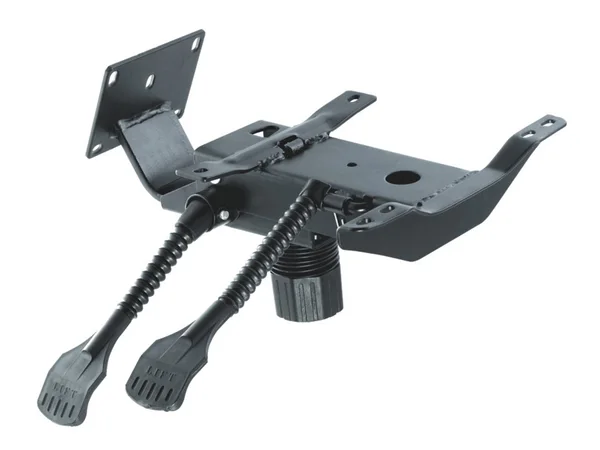
Between the fixed patterns sits a useful compromise: the slotted plate. Instead of four round holes, the plate carries elongated slots that span a range — a single plate covering, say, 160 through 200 mm in one axis. For an assembler running several seat boards, or a buyer consolidating SKUs, slots cut the part count honestly. The trade-off is real, though: a slot grips through bolt clamping force alone, where a round hole also locates the plate positively. On heavier-duty chairs we prefer fixed holes at the exact pitch, and we will say so even when the slotted plate would be the easier sale.
Retrofit: the questions that decide it
The most common interchange scenario is not a new chair — it is a fleet. A distributor has two thousand chairs in the field with tired mechanisms and wants a drop-in replacement. Whether that works comes down to a short list: the bolt pattern (measure it, never trust the original listing), the seat-board thickness the original bolts were sized for, the column bore, and the clearance envelope — a replacement plate a few millimetres taller can foul the seat pan or change the seat height enough for users to notice. Lever side and lever reach matter more on retrofit than on new builds, because the users have years of muscle memory.
If the pattern matches and the envelope clears, a retrofit is a screwdriver job. If it does not, you are re-drilling seat boards, and at that point the economics usually favour replacing the chair. This is also the argument for making interchangeability a design decision on day one: spec your new line on a standard pitch and the fleet you ship this year stays serviceable for a decade, whoever supplies the parts in year six.
Where "standard" quietly fails
Two patterns can match on paper and still not interchange. The pitch tells you where the holes are, not how accurately they were drilled, and not whether the plate's working geometry matches — two 200×200 plates can put the front edge of the seat at different heights or place the back bracket differently. The hole-position accuracy side of this is an incoming-inspection question, and we keep that discipline in a separate note on tolerances and incoming QC rather than repeating it here. The geometry side is simpler advice: when you switch supplier on a "standard" plate, always run a fit sample on your actual seat board and back frame before the container. The four numbers worth pinning down before any mechanism order are in our sourcing-spec note.
What a spare-parts program needs from the pattern
If you sell chairs with a multi-year warranty, the mounting pattern is quietly a warranty cost line. A fleet on a standard pitch can be serviced with any compatible plate years after the original tooling is gone; a fleet on a custom pattern is serviceable only as long as someone keeps that tooling alive, and tooling outlives orders less often than buyers assume. The practical move is to write the bolt pattern, the column bore and the lever side into your product file as controlled dimensions — the same way you would control a fabric colour — so that whoever supplies plates in year five is building to your numbers, not reverse-engineering a worn sample. We keep drawings on file for every pattern we have ever shipped, and more than once that file has rescued a buyer whose original supplier had moved on.
The trade-off, plainly
Standard pitches give you supplier freedom, spare-part availability and a cheaper plate, because the tooling is amortised across the industry. A custom pattern gives you a seat board nobody else can serve — sometimes that is deliberate brand protection, mostly it is an accident a designer never thought about. Our advice runs against our own interest: design on the standard pitch, keep your second-source option alive, and spend the custom-tooling budget where users can see it. The full plate range with pitches listed per part is in the mechanism catalogue, and the matching bases all share the Ø50 taper, so a mechanism swap never forces a base change.
Send us the bolt pattern off your current seat board — a photo with a tape measure across the holes is enough — and we will tell you which plates drop in and where a fit sample is worth the week. Reach us via the contact form or [email protected].