Tolerance is the least glamorous spec on a quote and the one that quietly decides whether your assembly line runs smoothly or fights every chair. A chair is a stack of parts from different processes — a cast base, a tapered column, a stamped plate — and they only work together if each part lands inside its tolerance band. When they do not, nobody can point to a single "broken" part; the chair just wobbles, squeaks or refuses to seat. Let me explain where the tenths of a millimetre actually matter.
The taper is a fit, not a gap
The Ø50 column joint between gas lift, base and mechanism is a taper fit — the cylinder wedges into the cone and the seated load locks it tighter. That only works if both cones are cut to the same angle and diameter within a tight band. A column a few tenths under tolerance seats too deep and the chair sits low or rocks; one over tolerance does not seat fully and works loose in service. This is why mixing cheap columns from one source with bases from another causes wobble that neither part is individually "guilty" of. We hold the taper on a fixed gauge so our parts seat to the same depth every time.
Hole pitch and the knob that fouls
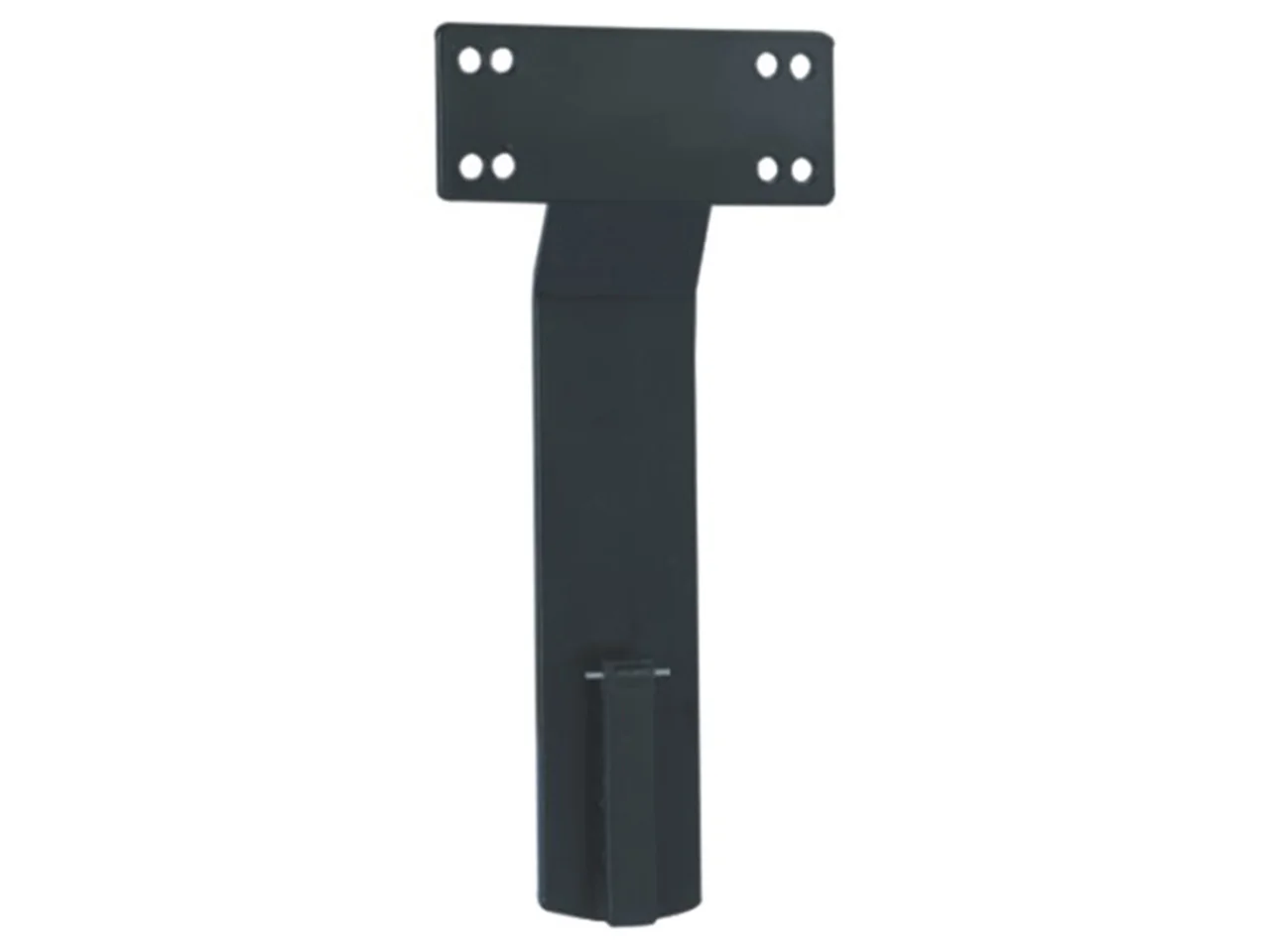
On a tilt plate, the mounting hole pitch and the lever positions carry a tolerance too. A pitch out by a millimetre across a 200 mm span means the bolts bind or the seat board cracks as you torque them. A lever or knob a couple of millimetres off can foul the seat pan and jam. These are not strength failures — the chair is "fine" — but they slow your line and generate that one-star "rattly" review. We check pitch and lever clearance on a fixture, not by eye.
What ±0.2 mm typically buys
For our stamped and formed hardware — appliance brackets, armrest cores, smaller fittings — a typical class tolerance is around ±0.2 mm on formed features. That is tight enough that parts interchange and assemble without selective fitting, and loose enough to be economical at volume. Tighter than that costs real money in tooling and rejects, so we hold ±0.2 mm where it matters for fit and only go tighter where a function genuinely needs it. Asking for a blanket "very tight tolerance" on everything just raises your price; asking for the right tolerance on the features that fit is what an engineer does.
The incoming checks worth running
Whatever you source and from whomever, a short incoming routine catches most of this: gauge the column taper seating depth on a sample, check the plate hole pitch on a fixture or against a known-good seat board, confirm lever clearance with a real seat pan, and rock an assembled chair to feel for column wobble. None of it needs a CMM. We run these checks before parts leave us, and we are happy to share the dimensions we hold so your incoming inspection matches ours — that alignment is part of how our OEM relationships stay quiet. Our quality page covers the test side; tolerances live with the part on the catalogue.
Send us the parts you are stacking together and the fit problems you have hit, and we will tell you which tolerances to hold and what to gauge on arrival. Reach the engineering desk through the enquiry form or [email protected].