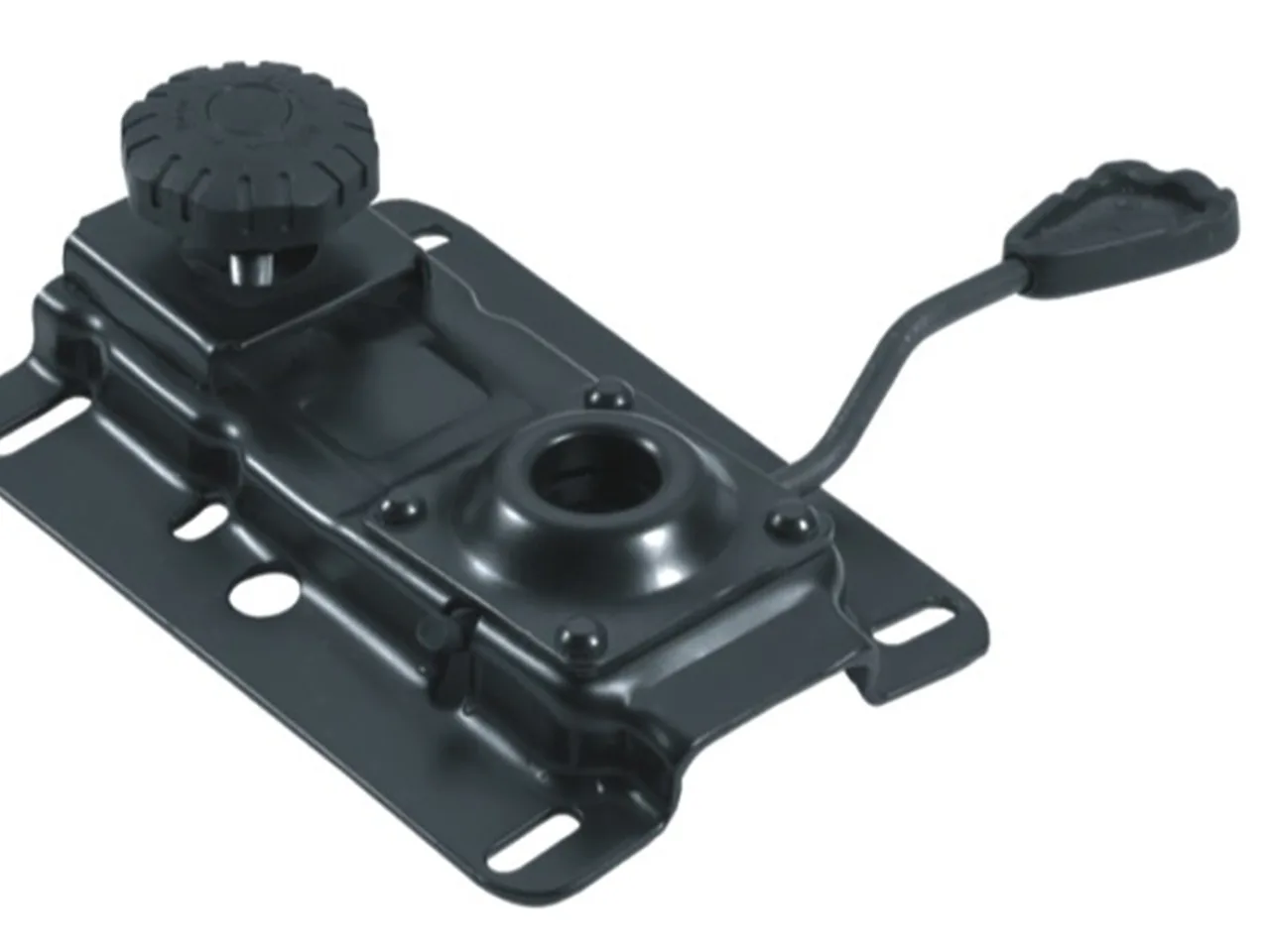
When a chair factory sends us an RFQ, the first line is almost never about steel grade or hole pitch. It is "synchro or knee-tilt?" That is the right question to start with, because the pivot location decides more about how the finished chair feels than the upholstery ever will. We build both. Here is how we tell buyers which one their program actually needs.
What the pivot does
A tilt mechanism is a hinge with a spring and a lock. The single variable that separates the families is where that hinge sits relative to the person.
A center- or single-point tilt puts the pivot directly under the middle of the seat. It is the cheapest to make and the simplest to repair, but when you recline, the front edge of the seat lifts and your heels come off the floor. For a four-hour-a-day home chair that is tolerable. For an eight-hour task chair it generates returns.
A knee-tilt moves the pivot forward, to roughly behind the user's knees. Because most of the body weight stays behind that point, the front of the seat barely rises and the feet stay planted. The recline feels like sinking back rather than tipping up. It is the pivot we steer executive and conference programs toward.
Where synchro is different
A synchro-tilt mechanism adds a geared link between seat and back so they move together at a fixed ratio — commonly one degree of seat tilt for every two degrees of back recline. That 1:2 ratio is the point of the whole design: the back opens up the hip angle while the seat tilts only slightly, so the user reclines without the seat front shoving up under the thighs. It needs a gear set and tighter tolerances, which is why a synchro plate costs more than a butterfly plate and why, historically, it lived only in expensive chairs.
Knee-tilt and synchro both solve the "feet leaving the floor" problem, but they solve it differently. Knee-tilt relocates the pivot; synchro keeps a central-ish pivot and controls the seat-to-back ratio with gearing. Knee-tilt typically gives you a stronger, simpler structure; synchro typically gives you a smoother angle relationship and the option of multi-position locking.
The trade-off we put on the table
Here is the call. If you are building a volume task chair to a price and the buyer wants "ergonomic" on the box, a synchro plate is the honest minimum — a center-tilt at that price point will come back. If you are building executive or 24/7 seating where the user is heavier and reclines hard, we push knee-tilt for the structure and the planted-feet feel, and we will tell you it costs more in steel. What we will not do is sell you a synchro badge on a single-pivot casting; the lab cycle test finds that, and so does your customer.
One more practical note for sourcing: a synchro plate constrains your back-frame geometry, because the gearing assumes a back-pivot range. If you are pairing our plate with your own back, send the back drawing early so we match the ratio to your frame, not to a generic one. Our OEM workflow bakes that fit check into the sample stage.
Tell us the chair class, the target user weight and the recline behaviour you want, and we will recommend a plate and a load class with numbers, not adjectives. Reach the engineering desk through our contact form or email [email protected]. If you want the full plate range first, see the tilt-mechanism catalogue.